In last week’s blog on regulations, we explore the idea of how the sustainable development goals set by the united nations are also inter-connected and that the strategies for achieving these goals will be overlapped with one another.
This week, we will look at the aspect of social innovation and how it can be used to tackle the many issues we face as a society when it comes to wastewater treatment. But firstly, what do we even mean by social innovation?
Put it simply, social innovations are new social practices that aim to meet social needs in a better way than the existing conditions. It is the process of developing and deploying effective solutions to challenging and often systematic social and environmental issues in support of social progress.
There have been numerous startups over the past few years through which several humanitarian projects. A startup usually begins with a campaign which makes a pitch to generate investment through crowdfunding. Population funding platforms such as Gofundme,
Indiegogo and Startsomegood have gained strong attention over the years thanks to social media.
As I illustrated in last week’s blog, people have a “couldn’t care less” attitude when it comes to wastewater. We know it’s important but we just can’t be bothered doing anything about it!
But what if we delivered powerful messages for wastewater through people who had a strong influence?
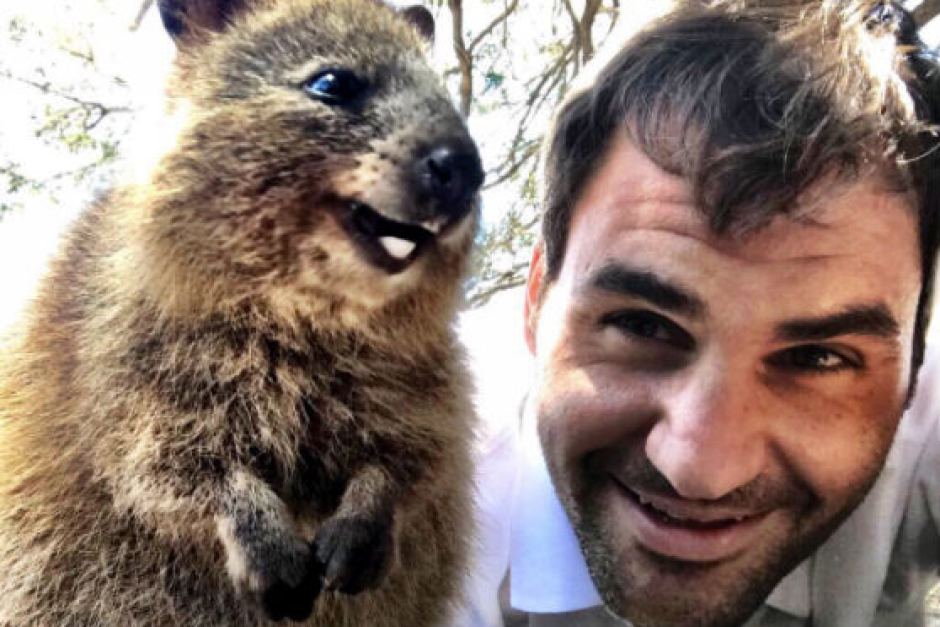
Let’s wind the clock a bit to last year for the WA tourism sector. Swiss tennis legend Roger Federer visited our very own Rottnest Island and took a selfie with a Quokka. On social media, this selfie got more than 540,000 likes and a short time after his visit, Rottnest Island has had the highest numbers of visitors on record over a given year.
Now you might be wondering what any of this has to do with social innovation?
We have to first realise that things are being done differently today more than ever before. Jobs are being searched on places like LinkedIn, not the newspaper. To look up a business, you’d google or go through reviews on Yelp, not the Yellow pages. To find out the great events that are happening near you, we will check out Facebook or Eventbrite, not as much the posters on community noticeboards.
The way we engage with one another is changing dramatically, and utilising social media platforms is vital for creating long lasting change when it comes to wastewater.
A real-life example that really helps illustrate this point is the case of Thankyou, an Australian social enterprise. This company donates funds to safe water, hygiene, sanitation programs and food security programs in 16 countries. This is done through the sales of its water, body care and food products.
But it was far from smooth sailing for this social enterprise. It took them 5 years before both major supermarkets Coles and Woolworths agreed to put their products on their shelves.
The turning point? A launch campaign driven by the public targeted towards Coles and Woolworths’ Facebook pages.
Thousands of Australians posted footages of themselves urging the supermarket giants to stock Thankyou products.
It is clear that a huge market is available for environmentally friendly products and causes with people becoming more aware of their environmental impact.
The agenda for addressing sustainable development goal 3 of clean water and sanitisation can be achieved through social media on local, national and global scales.
Coming back to Roger Federer’s magic when it came to Rottnest Island, we can see that the messenger is as important as the message itself. For social media to really prove its value, we need advocates that have a strong social influence.
Fortunately, we have celebrities in this world who do some good besides living the high life. One of these Matt Damon. In 2009, Matt Damon founded Water.org, this is a microfinance organisation that enables families in developing countries to build clean water and sanitisation systems.
Another great example comes from the well-known celebrity Kendell Jenner, the well known American model and media personality. With over 28 million followers on Twitter and another 115 million followers on instagram, Jenner holds a HUGE social influence with her large audience base.
Thankfully, it has not been wasted on just self-marketing. She is a key advocate of Charity Water, another non-profit organisation bringing clean and safe drinking water to people in developing countries. Since humble beginnings in 2006, this group has funded over 38,000 water projects globally predominantly in Africa and India.
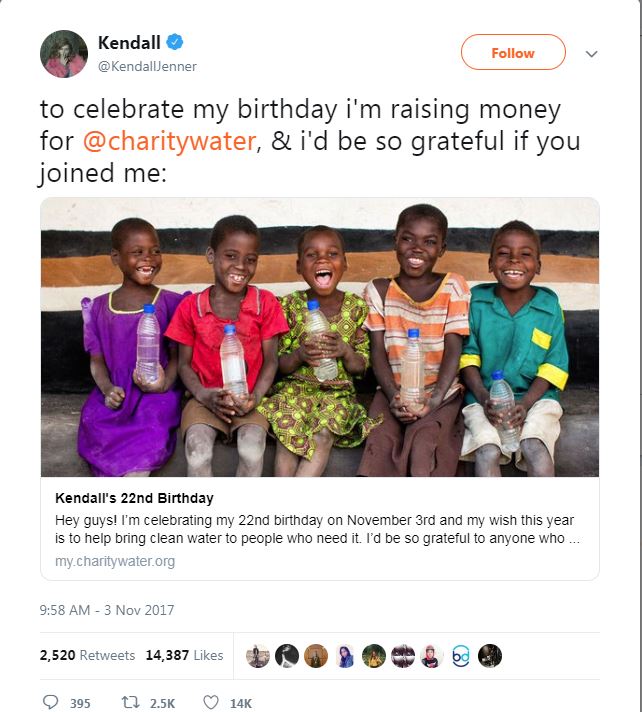
This non for profit is really transparent about the progress of their projects. You can even get access to their project database of all their remote sensors for clean water measurements over here:
https://www.charitywater.org/our-projects/completed-projects/
From both of the examples of Thankyou water and widely followed celebrities such as Matt Damon and Kendall Jenner, we can see the immense power that social media has in bringing awareness to important issues that face many in today’s society.
When people use their powerful platforms to create positive change, whilst not guaranteeing change, it certainly begins to pave the way for action to be taken towards the sustainable development goals. The examples we have seen have shown how the goal of clean water and sanitisation can be achieved. However, celebrities such as Leonardo Di Caprio have also championed their cause for climate change for several years including a time at an oscar winning speech for The Revenant, something that can’t be overlooked for actions towards the goal of climate change.
References
 The Water Police